How Our Waste Constitutes a Viable Resource
TPE — Supervised Practical Project (2016–2017), Year 11, Life Sciences & Physics-Chemistry. Lycée Liberté, Bamako. SACKO Cheickna & TOUNKARA Seydou.
Archive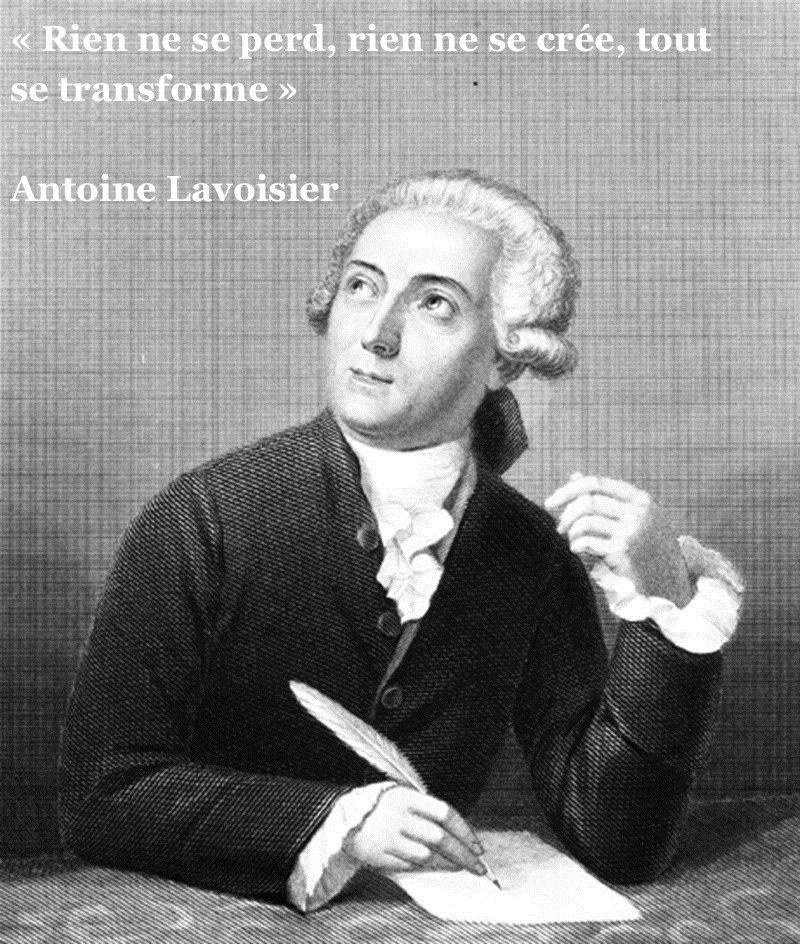
RESEARCH AXIS: TRANSFORMATION OF MATTER
THEME: MATTER AND FORM
Academic Year: 2016 / 2017 Class: Year 11 S1 Students: SACKO Cheickna & TOUNKARA Seydou Supervising Teachers: Ms. Ghandour & Mr. Sotbar Subjects: Life Sciences & Physics-Chemistry School: Lycée Liberté, Bamako
Waste Valorisation
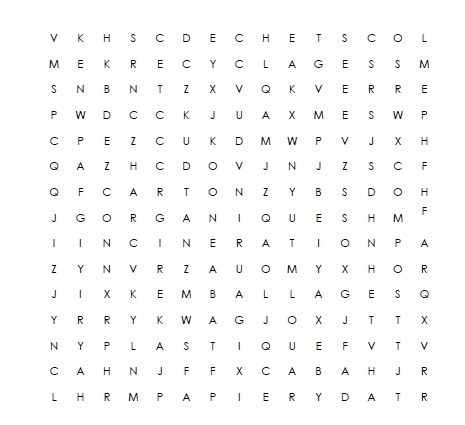
BEFORE YOU BEGIN READING THIS DOSSIER, WE INVITE YOU TO TRY THIS WASTE-THEMED CROSSWORD PUZZLE: MAXIMUM NUMBER OF WORDS: 10. FOUND FEWER THAN 10? NO WORRIES. AFTER READING THIS DOSSIER, THE WORDS WILL BE MUCH EASIER TO FIND. ENJOY THE READ.
Research Question: How Does Our Waste Constitute a Viable Resource?
Table of Contents
- Introduction
- I) Waste as a Material Resource
- A) Composting: Turning Waste into Fertiliser
- B) Glass Recycling
- II) Waste as an Energy Resource
- A) Methanisation
- B) Waste Incineration with Energy Recovery
- Conclusion
- Bibliography / Webography
- Interviews
- For the Curious
- Glossary
Introduction
Human activity produces between 3,400 and 4,000 billion tonnes of waste per year (source: www.planetoscope.com). Yet despite the sheer quantity of waste we produce, very few people spare a thought for what becomes of it — even though the waste we generate and find so bothersome is, in fact, a genuine viable resource. The famous French chemist Antoine Lavoisier (1743–1794) once stated: "Nothing is created, nothing is lost, everything is transformed." It is precisely from this principle that we can assert that our waste is a viable resource; indeed, for many years now, researchers, scientists and engineers around the world have been developing techniques aimed at converting our waste into raw materials or energy.
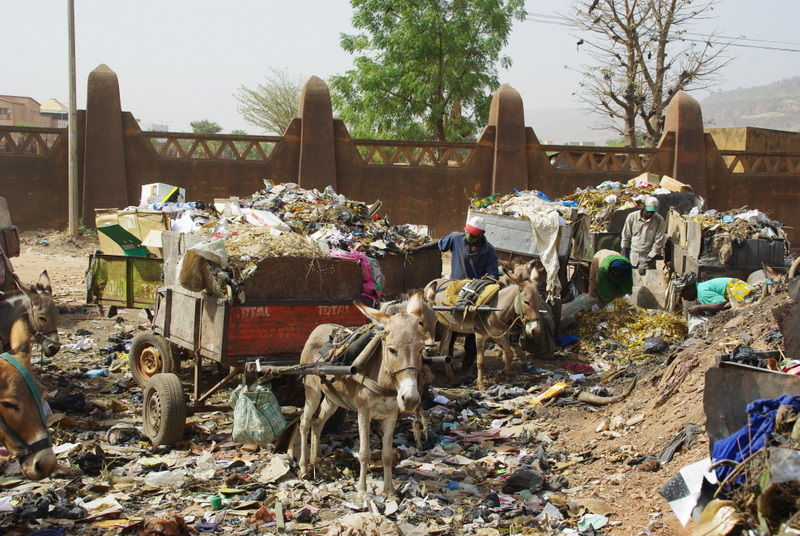
photo taken in Bamako (Mali – West Africa)
Waste is defined as any residue from a production, transformation or utilisation process — any substance, material or product, or more broadly any moveable good, that has been abandoned or that its holder intends to abandon (according to the Environmental Code [art. L541-1]). Put simply, waste is whatever we decide to throw in the bin. However, it is essential that we do not throw our waste just anywhere, as this can disturb people living in that environment, particularly because of odours.
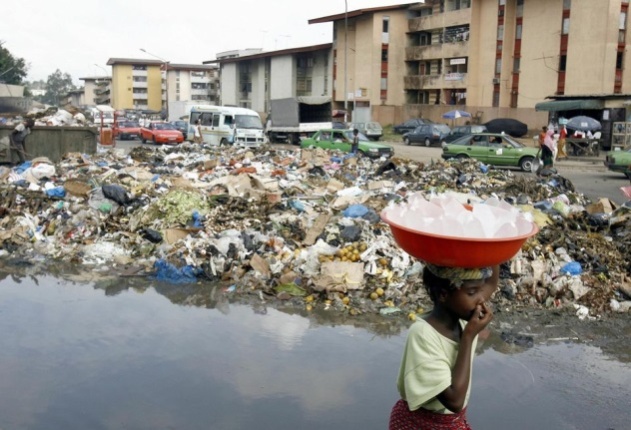
photo taken in Côte d'Ivoire (West Africa)
Beyond that, disposing of waste indiscriminately poses a serious threat to the planet and to human health. Waste — particularly plastic waste — gradually breaks down into small toxic particles in marine and terrestrial environments worldwide. These particles can be absorbed by living organisms at every level of the food chain. The presence of waste in the oceans affects approximately 700 marine species, and around 100 million marine mammals die every year as a result.
Human health is also at risk: many ocean fish contain toxins due to the waste found in the seas, and humans are major fish consumers — on average, 4,200 kilograms of fish are consumed every second worldwide.
As the population grows, so will the quantity of waste produced, putting human health and other living species in ever greater danger. It is therefore our duty to manage our waste in an intelligent way.
Given all the harmful impacts our waste has on the environment and on human health, it is hard to believe that waste could constitute a viable resource — yet that is precisely what this project aims to prove, while answering the following research question: How does our waste constitute a viable resource?
We will first explore waste as a material resource (I), then demonstrate that waste is also an energy resource (II).
I) Waste as a Material Resource
Definition — resource: 1: wealth
On 3/12/2016, during an interview, Facinet Coulibaly (an employee at Macrowaste, a waste collection company in Bamako) stated: "…waste causes enormous environmental and health problems in this city of Bamako. I look forward to the day when Malians will consider waste as a resource, because waste truly is a material and energy resource…"
Celebrating waste as a genuine material resource is a vision that is becoming increasingly common, even in countries like Mali where modern waste valorisation techniques are limited. Yet one can already see that certain individuals in Mali have made waste valorisation their primary source of income:
"Some people find us disgusting — but they're no better than us. If God made us this way, it's not our fault." — Testimony of a woman in Bamako who earns her living by selling plastic waste. She goes on to say she would not hesitate to leave the waste collection trade if another income-generating activity came her way, but that for now, this is what allows her to meet her own needs and those of her family.
Let us study the following activity, titled "Case Study 1", in order to gain a clear understanding of material valorisation (recycling) of waste:
Case Study 1 (A Step Towards Defining Recycling)
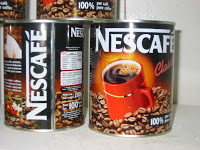
Young Abdoulaye, aged 4 and a great fan of toy cars, had left all his toy cars at the park and spent the evening complaining about it. His older brother Sékou spent several minutes thinking about how to cheer him up, and eventually found the solution in the rubbish bin — yes, the rubbish bin! He had the brilliant idea of turning an empty coffee tin into a little car to delight his younger brother. Mission accomplished: young Abdoulaye played with it all evening.
Note: fictional scenario
As seen in Case Study 1, recycling (material valorisation) consists of making a new object from an old one that was destined to be thrown away. More scientifically, recycling is a waste treatment process that allows the materials derived from waste to be reintroduced into the production cycle of another product.
Definition — life cycle: 1: the series of stages in a product's life from production to disposal
QUESTIONS: (multiple choice for question 1)
- What has Sékou just done? a) bought a toy car / b) made a toy car from objects destined for disposal (i.e. waste) / c) repaired an old worn-out toy car
- In your opinion, could he have done this if the bin had contained only food scraps?
Recycling example:
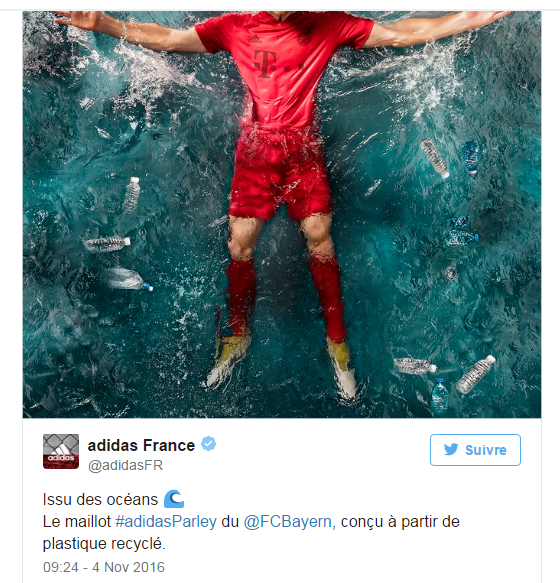
Football jerseys made from plastic bottles recovered from the sea and recycled
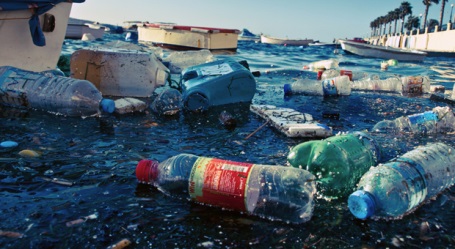
Plastic bottles thrown into the sea
This example perfectly illustrates recycling: it allowed the plastic from the bottles to be reintroduced into the production cycle of another product (the jerseys).
Material valorisation of waste has been growing in importance within waste management for several years. France, for instance, set a national target of achieving 55% material valorisation by 2020.
Material valorisation (recycling) is already widespread across Europe. During a survey conducted as part of this project, we interviewed several local waste collectors about the forms of material valorisation they were aware of in Mali. Both people interviewed mentioned that some people in Mali transform waste into fertiliser (composting), and that others use waste as a source of income (selling plastic waste).
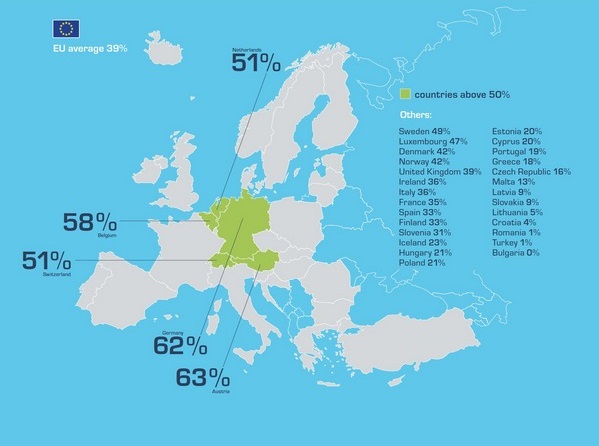
source: Institut de l'économie circulaire
Note: the percentage is expressed as a proportion of total waste generated per country. Example for France: "35% of waste generated in France is recycled"
A) Composting: Turning Waste into Fertiliser
A few important concepts to know before going further:
There are several types of waste, including: industrial waste (produced by companies, such as used batteries); organic waste (residues of plant or animal origin); household waste (resulting from the daily life of each individual); glass waste; etc.
Each type of waste is associated with a particular valorisation method. In this section we will study composting, one of the main valorisation methods for organic waste. It is important to know first that organic waste consists of organic matter derived from living organisms — for example, vegetable peelings, food leftovers, and garden waste.
What does composting consist of?
Composting is a very ancient practice. Before the advent of manufactured fertilisers, compost combined with animal excrement was the only fertiliser available.
Definition — fertiliser: 1: a substance intended to improve plant nutrition and soil properties
Composting is a process of decomposition of organic waste by micro-organisms (bacteria, fungi, etc.) in the presence of oxygen. The end product of this process is what we call compost.
The composting process is summarised in the image below:
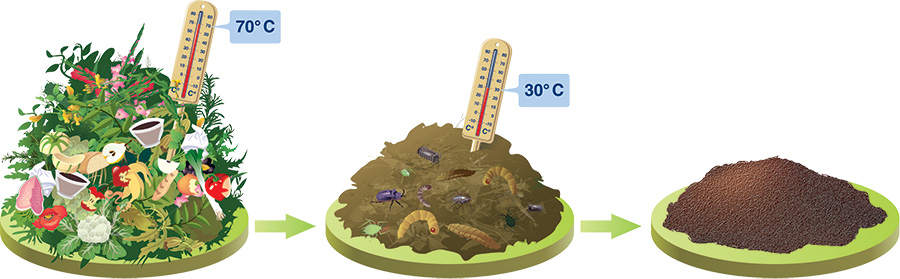
Overall composting equation:
organic matter + oxygen + micro-organisms → humus (compost) + heat + CO₂ + H₂O
Definition — fertiliser (engrais): 1: organic fertilising substance
How does organic waste transform into compost?
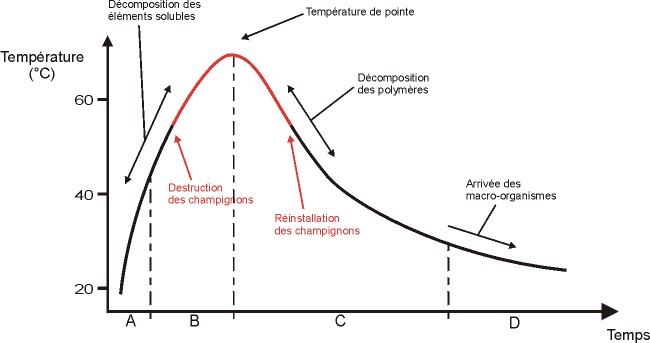
The transformation of organic waste into compost takes place through 4 main biological phases, during which the temperature of the composting environment changes:
a) The mesophilic phase is the first phase of composting. During this phase, mesophilic micro-organisms (bacteria, fungi, etc.) attack the simple molecules (carbohydrates, lipids, amino acids…) and certain polymers (starch, proteins, pectins…) in the organic waste. This decomposition by micro-organisms causes a rise in temperature (up to approximately 35°C).
b) The thermophilic phase is the second phase, and the one in which the compost temperature reaches its highest point — generally around 60°C. This temperature increase causes the mesophilic micro-organisms to be replaced by thermophilic / thermo-tolerant micro-organisms. During this phase, more complex polymers such as cellulose and hemicellulose are broken down.
Definitions:
- mesophilic micro-organisms: organisms that thrive at temperatures between 20 and 40°C
- polymers: macromolecules
c) The cooling phase is the third phase. During this phase the compost gradually loses heat and drops back towards approximately 35°C. This temperature decrease triggers the return of mesophilic micro-organisms, which break down the remaining polymers and incorporate nitrogen into the complex molecules of the compost. This incorporation enables the formation of humus.
d) The maturation phase is the final phase. During this phase, micro-organism activity is very low, but macro-organisms now invade the compost. They physically attack the organic matter by turning it, chewing it and sucking it. By the end of this phase, the compost has been completely transformed into humus.
The following image summarises these 4 phases, where:
- A = mesophilic phase
- B = thermophilic phase
- C = cooling phase
- D = maturation phase
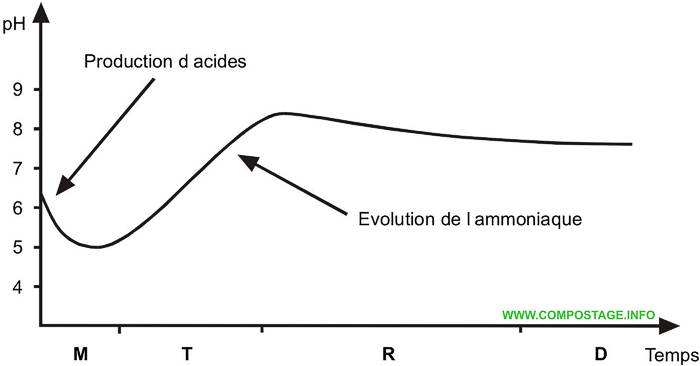
Physico-chemical parameters that change during composting:
- Temperature: see previous graph
- Acidity (pH): see graph alongside
Effects of compost on soils:
Compost:
- improves soil structure by increasing aggregation;
- prevents or corrects soil acidification;
- promotes better root development;
- progressively supplies plants with nutrients;
- limits the development of pathogenic organisms; etc.
How compost, derived from the organic matter in waste, makes waste a material resource:
Compost, highly valued for its ability to improve soil quality, can be used directly once obtained or sold on. In Cameroon, for example, compost is primarily sold in 50 kg bags, at a price of around 1,500 CFA francs per bag (source: compostagecefrepade.files.wordpress.com).
The goal of composting is to obtain compost that can be used as fertiliser. By valorising organic waste, composting demonstrates that organic waste is a material resource capable of generating economic activity. What about glass recycling?
B) Glass Recycling
First, it is important to know that if glass is not recycled, it would take 3 to 4 millennia to decompose in nature. Glass recycling is therefore fundamental to preserving the environment. Glass is a particularly interesting material because it can be recycled indefinitely without any loss of quality.
Key facts about glass recycling:
- 2 tonnes of recycled glass yield approximately 4,250 bottles of 75 cl
- Some glass types are not recyclable, such as: crockery; cookware glass; light bulbs; porcelain… These are separated from recyclable glass during the sorting process
- Colour separation is required depending on the type of glass being remade. There are primarily 2 glass colours: clear and coloured. Colour separation is necessary because clear glass can only be made from clear glass, just as coloured glass can only be made from coloured glass.
How does glass recycling work?
After glass is collected from households, several sorting steps take place to separate different types of glass and remove non-glass elements. The glass is then ground into cullet using a large crusher, before being melted down in 3 stages:
| Stage | Temperature | Reaction | Effect |
|---|---|---|---|
| Melting | 800°C to 1,400°C | gas release and bubble formation | glass melts |
| Refining | 1,450°C to 1,530°C | impurities rise to the surface due to increased liquidity and fining agents | glass becomes homogeneous and impurities are eliminated |
| Cooling | 1,530°C to 1,000°C | temperature reduction | viscosity appropriate for shaping |
Once the liquid cullet is ready for shaping, it can take any form: bottle, perfume flask, jar, etc.
Definitions:
- cullet: crushed glass powder
- fining agents: substances that facilitate the elimination of gases from chemical reactions
- shaping: forming glass products into their final shape
Note: optical sorting removes non-recyclable elements / air-jet sorting removes lightweight elements (caps, labels, etc.)
Here is an image summarising the main stages of glass recycling:
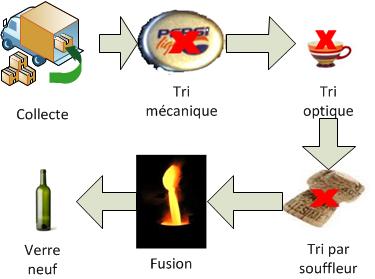
Glass waste takes an "eternity" to decompose in nature — a piece of glass left in the wild generally takes several thousand years to break down. Yet that same piece of glass could be recycled and resold as brand-new glass, and if that new glass ever wears out, it can be recycled again to produce the same product — and so on, indefinitely.
Our glass waste can therefore be given multiple lives, which confirms that glass waste is a resource that must absolutely be valorised — either by recycling (75% of glass in France is recycled [source: www.verre-avenir.fr]) or by reuse, as is common in shops across Mali.
QUIZ – PART I
- Why is there so much more waste today than in the past?
- a) due to the sharp increase in the world's population
- b) because waste undergoes repeated divisions in nature
- What is a fertiliser?
- a) a product used to clean dustbins
- b) a product intended to improve soil quality
- How many phases does composting involve?
- a) 7
- b) 4
- In what order do the composting phases follow one another?
- a) mesophilic phase – maturation phase – thermophilic phase – cooling phase
- b) mesophilic phase – thermophilic phase – cooling phase – maturation phase
- c) thermophilic phase – cooling phase – maturation phase – mesophilic phase
- How many times can glass be recycled?
- a) once
- b) 9 times
- c) indefinitely
- What is the definition of "cullet"?
- a) small pieces of glass
- b) a product derived from composting
II) Waste as an Energy Resource
On 3/12/2016, during an interview, Facinet Coulibaly (an employee at Macrowaste, a waste collection company in Bamako) stated: "…waste causes enormous environmental and health problems in this city of Bamako. I look forward to the day when Malians will consider waste as a resource, because waste truly is a material and energy resource…"
Before discussing waste as an energy resource, it is worth noting that in Sweden, an entire city is already heated using energy recovered from a waste treatment plant. There are two main types of energy valorisation of waste: methanisation and waste incineration with energy recovery. We will first study the methanisation process (A), then turn to waste incineration with energy recovery (B).
A) Methanisation
Let us begin by examining the results of an experiment conducted as part of this project, in order to introduce the concept of methanisation.
Seydou and Cheickna (the two members of this group) were debating what type of gas was involved. Seydou thought it was CO₂ (carbon dioxide), while Cheickna thought it was CH₄ (methane). The two group members decided to call on Sherlock Volta, a mutual friend and outstanding physicist-chemist.
Experimental protocol:
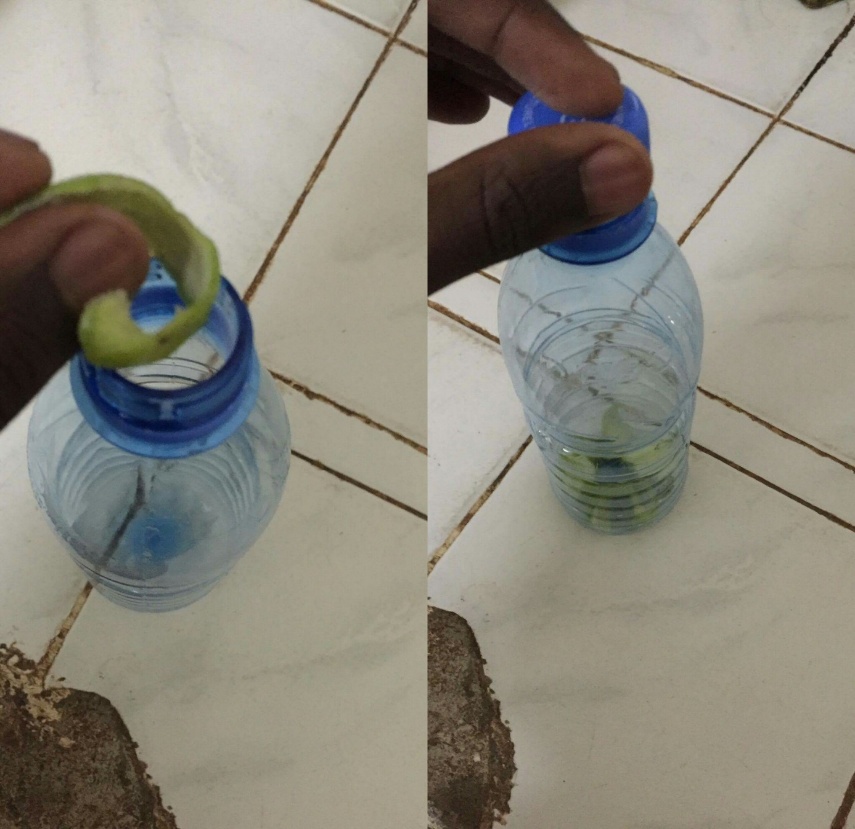
- place fruit peelings (organic waste) inside a plastic bottle
- seal the bottle
- place the bottle in a room-temperature environment
- leave the bottle in that environment for 5 days
- time: 4:42 pm — date: 6 January
Experimental results:
- Day 1: no particular signs
- Day 2: no particular signs
- Day 3: bottle hard to squeeze
- Day 4: condensation appearing on the inside walls of the bottle
- Day 5: upon opening the bottle, a slight hissing sound was heard, and a nauseating smell was released
The slight hissing sound and the condensation on the bottle walls indicated the presence of a gas that had formed inside the bottle.
Experiment photographs:
Sherlock Volta declared: "It seems to me that you are both very close to the answer. The experiment you have just carried out is a fermentation of organic waste in the absence of oxygen — a process also known as methanisation. Methanisation releases a gas called biogas, which is composed mainly of methane and carbon dioxide."
The group then took on the task of explaining methanisation in detail:
Methanisation (also called anaerobic digestion or anaerobic fermentation) is, like composting, a process of decomposition of organic waste by bacteria. However, methanisation takes place in an anaerobic environment (without oxygen), unlike composting which takes place in an aerobic environment (with oxygen). Methanisation primarily produces methane (CH₄) and carbon dioxide (CO₂).
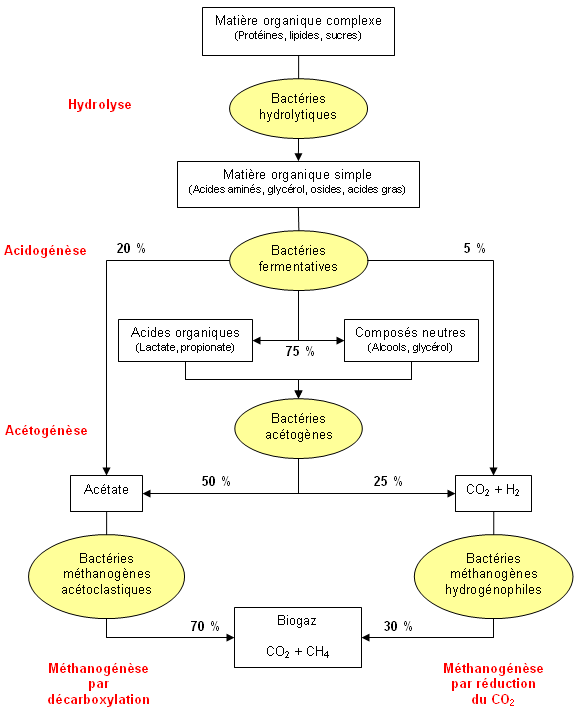
Anaerobic fermentation is carried out by methanogenic bacteria acting in the absence of oxygen. Three main stages can be identified during fermentation:
- Hydrolysis and acidogenesis
- Acetogenesis
- Methanogenesis
Hydrolysis and acidogenesis:
During this phase, organic matter (proteins, lipids, sugars, etc.) is broken down into simple organic substances (amino acids, glycerol, fatty acids, etc.), which are then converted into organic acids and alcohols by various groups of anaerobic bacteria known as hydraulic or fermentative bacteria.
Acetogenesis:
This phase transforms the compounds produced during hydrolysis and acidogenesis into direct methane precursors: acetate, hydrogen, and carbon dioxide. This transformation can occur in two different ways:
- Via heterofermentation, which produces hydrogen, carbon dioxide, pyruvate, butyrate, and propionate.
- Via homoacetogenesis, which produces acetate from organic molecules derived from fermentation.
Methanogenesis:
During this third and final stage, the products from the acetogenesis step are converted into methane. This conversion can happen in two ways:
- Hydrogenotrophic: transformation from hydrogen and carbon dioxide
- Acetoclastic: transformation from acetate, hydrogen, formate, methanol, and methylamines.
Diagram illustrating the stages of anaerobic fermentation:
The biogas obtained through methanisation can be valorised in several ways:
- Thermal valorisation: The combustion heat of the biogas is used to produce hot water or steam. For example, at wastewater treatment sites, 15 to 30% of the biogas produced during fermentation is used to maintain the fermentation temperature between 37°C and 55°C depending on the type of digester.
- Electrical valorisation: The biogas powers a gas engine, which in turn produces electricity and heat — a process known as cogeneration. The heat produced can be used to heat the digester, produce hot water, or feed district heating networks.
- Chemical valorisation: The biogas can serve as a biofuel, primarily intended for public transport and household waste collection vehicles.
Methanisation is a process with multiple virtues. It is not only a practical means of producing renewable energy, but also an ecological one. The fermentation process leaves behind residues called digestate, which can be used for agricultural purposes as a source of fertiliser for crops.
B) Waste Incineration with Energy Recovery
Case Study 2:
Fatoumata, a cleaner at an orphanage, had been instructed one day to collect all the fruit peelings that the children had thrown on the ground. When she finished collecting them, she realised that the main bin she wanted to use was full. Concerned about the tidiness of the courtyard, she put the peelings into a plastic bottle that was under her bed, waiting for the main bin to be emptied. When the waste collection lorry finally arrived (one week later), she picked up the bottle and noticed light condensation on the inside walls. When she removed the cap, she heard a slight hissing sound, indicating the presence of a gas in the bottle.
But what kind of gas was it?
We will now put ourselves in Noum's position and explain to his family what waste incineration with energy recovery consists of:
Noum, a young Malian student, had the opportunity to visit the city of Stockholm (Sweden) as part of a school trip. He was amazed by the incredible number of homes powered by energy derived from waste. He even had the chance to visit an incineration plant. But once back home, his curious family asked him many questions.
Noum's family: We know a bit about waste recycling, and we're wondering: why not treat all waste by recycling it instead of incinerating it?
Noum: Waste that is incinerated is generally no longer recyclable. Incineration is the final stage of waste treatment, reserved for waste that can no longer be recycled.
Noum's family: Ah, I see! And what makes incineration beneficial?
Noum: It allows the volume of waste to be profitably reduced by 90%, and produces energy through combustion of the waste.
Noum's family: Incredible! But how does that work? By magic?
Noum: Not at all! Incineration is carried out using an incinerator — a device designed to burn waste.
Noum's family: Tell us more, Noum, we want to know everything. That way we could incinerate our own waste and power our home, because electricity bills are very hard to afford these days.
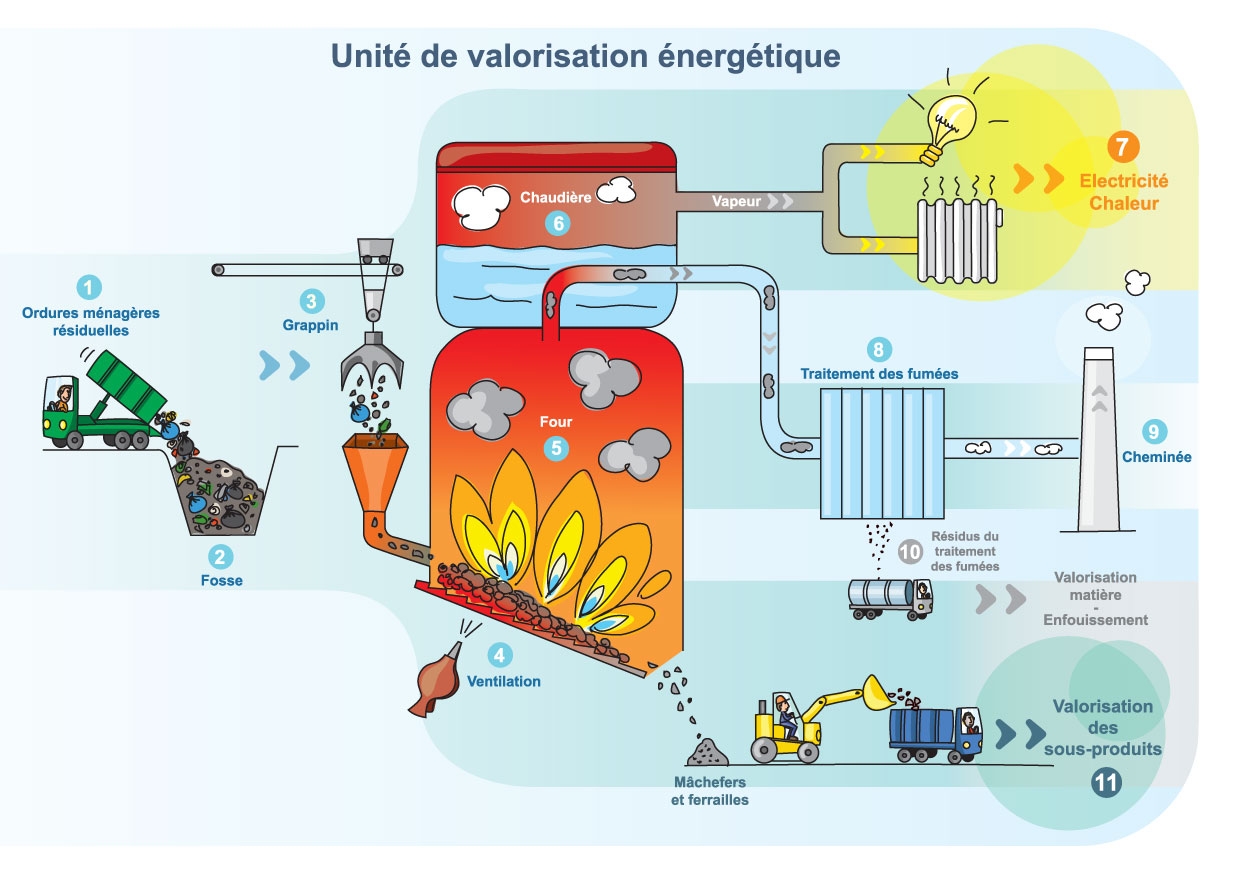
Noum: First, after the waste is collected, it arrives at the incineration plant and is stored in a large pit. The waste is then directed into the furnace via an overhead crane and a feed hopper, where it is burned at high temperatures (generally between 850 and 1,000°C). The combustion process generates solid residues called bottom ash — representing 25% of the initial waste volume — as well as fly ash and fumes. The bottom ash can be used in road construction, and the fly ash can be used to neutralise the fumes (which contain harmful substances). Those fumes must therefore be purified before being released into the air.
Noum's family: Right, all of that is good — but you still haven't told us how to benefit from incineration.
Noum: I was just getting to that. The heat energy from the waste can be harnessed in two different ways: it can either be used to supply an urban district heating network, or to generate electricity.
Noum's family: Tell us first how that heat is used to generate electricity.
Noum: To generate electricity, the heat from the waste leaving the furnace — at around 1,000°C — passes through a steam boiler. This creates high-pressure steam. That very hot steam, at around 400°C, is then directed to a steam turbine, which converts it into mechanical energy. This mechanical energy is then converted into electricity via an alternator.
Noum's family: Wow, fascinating! Now tell us how incineration can supply a district heating network.
Noum: It's quite straightforward. At the boiler's outlet, the steam enters a large thermal network running throughout a whole municipality, and in this way many homes can be heated using the energy from waste.
Noum's family: Noum, your younger brothers seem a bit lost — can you give us a summary of everything you've just explained?
Noum: Of course. In summary, if we were to illustrate everything I've just said, it would look like this:
General facts about waste incineration with energy recovery:
- One tonne of incinerated waste can produce approximately 700 kWh of electricity
- One tonne of incinerated waste can produce 1,500 kWh of heat
- By developing its waste-to-energy capacity, Europe could save 13.3 million tonnes of oil equivalent per year [source: French Senate]
Waste incineration not only gets rid of ultimate non-recyclable waste, but also exploits the energy potential of waste by converting it into heat or electricity. But is this practice risk-free?
Waste incineration is undeniably advantageous in terms of exploiting the energy potential of waste, but its safety is subject to considerable criticism because it carries environmental and health risks.
First, as we noted above, the fumes from waste incineration must be purified before release. This is because they contain harmful substances — strict standards even exist that legally require incineration plants to treat their emissions before discharging them into the air.
Among the main harmful substances found in these fumes are: carbon dioxide (CO₂), nitrogen oxides (NOx), sulphur dioxide (SO₂), hydrochloric acid (HCl), and several other harmful substances. These can have very serious effects on human health. For example, nitrogen oxides (NOx) can convert haemoglobin (the molecule responsible for oxygen transport in the human body) into methaemoglobin, thereby reducing its oxygen-carrying capacity. Nitrogen oxides from incineration also contribute to acid rain formation.
With modern incineration plants, however, the health risks associated with waste incineration are decreasing, as plants are now legally required to be fitted with fume treatment systems to reduce the quantity of harmful substances released into the air.
Waste incineration can be extremely dangerous when not carried out correctly — for example, when emission standards for harmful substances are not respected, or when open-air burning is practised (which is still the case in many countries, including Mali).
Conclusion
Throughout this project, we have been able to establish that our waste can be considered a viable resource with several beneficial properties. On one hand, our waste can be treated as a material resource through certain valorisation processes requiring physical and chemical operations (glass recycling, plastic recycling, composting, etc.). On the other hand, our waste can be treated as an energy resource through methanisation or waste incineration with energy recovery. However, all of these valorisation methods raise challenges: either they produce potentially harmful substances for the environment and human health (as with the harmful emissions from incineration), or they remain insufficiently widespread in certain parts of the world (as in the case of Mali).
Antoine Lavoisier said: "Nothing is created, nothing is lost, everything is transformed" — and it is precisely from this principle that we can affirm that our waste is a viable resource, because it can be transformed into raw materials or into energy. Our waste is, without a doubt, a viable resource.
Bibliography / Webography
Websites:
- https://cs-nyu.edu/~jchen/publications/garbagecollection.pdf (accessed 2 October 2016)
- www.notre-planete.info/actualites/actu-3422.php (accessed 2 October 2016)
- https://cs-nyu.edu/~jchen/publications/garbagecollection.pdf (accessed 10 October 2016)
- http://www.planetoscope.com/dechets/363-production-de-dechets-dans-le-monde.html (accessed 14 October 2016)
- http://www.onegreenplanet.org/animalsandnature/marine-animals-are-dying-because-of-our-plastic-trash/ (accessed 14 October 2016)
- http://slowfood.com/slowfish/pagine/fra/pagina.lasso?-id_pg=46 (accessed 14 October 2016)
- http://www.ademe.fr/expertises/dechets/elements-contexte/dossier/impacts-dechets-lenvironnement-sante/evaluer-risques-sanitaires (accessed 14 October 2016)
- http://www.futura-sciences.com/planete/dossiers/pollution-dechets-plastique-mer-septieme-continent-1898/page/4/ (accessed 20 October 2016)
Interviews
Seydou, Cheickna and Facinet Coulibaly:
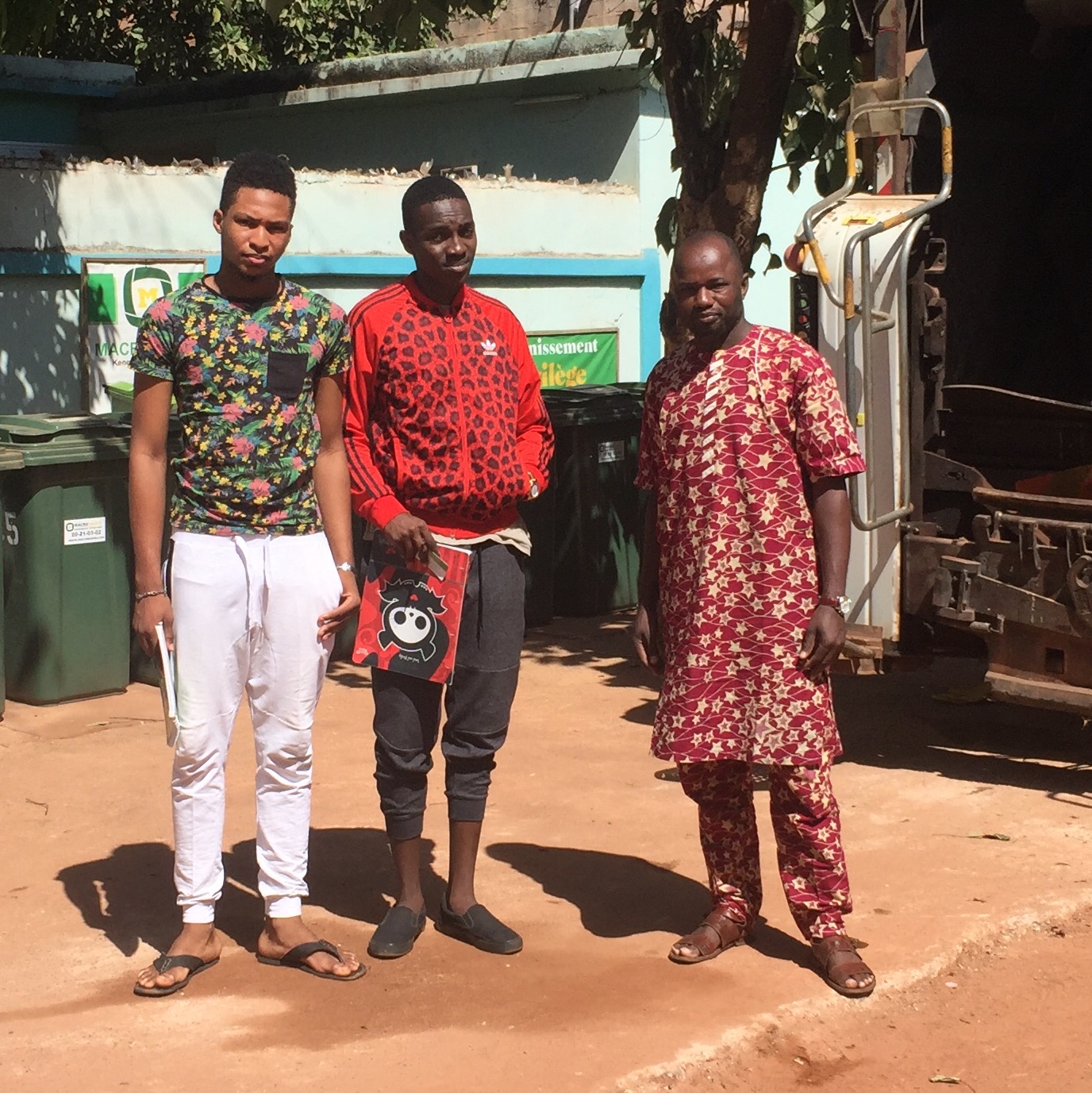
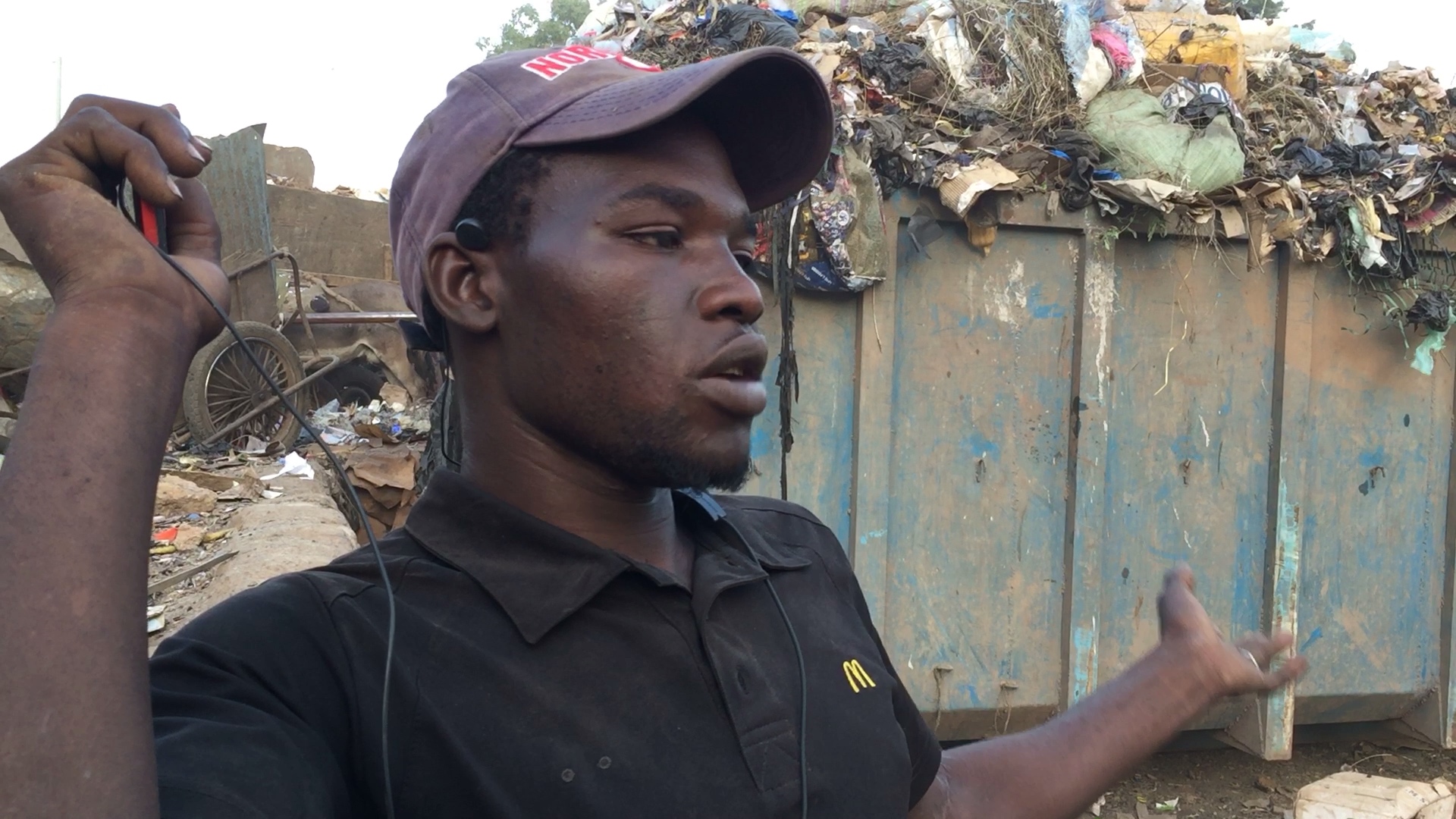
Seydou, Cheickna and Facinet Coulibaly (left to right)
Photo taken by the group at the landfill near Lycée Liberté
For the Curious
Do you have lots of plastic bottles you have no use for? Discover 20 ways to give them new value on this website: http://www.thebetterindia.com/58509/reuse-plastic-bottles-reduce-pollution-waste/
The name Sherlock Volta (the fictional character appearing in Part II) is a combination of Sherlock Holmes (the fictional detective character who first appeared in 1887 in the writings of Arthur Conan Doyle) and Alessandro Volta (the Italian physicist who invented the electric battery in 1799, and after whom the unit of electrical voltage, the "Volt", is named).
Glossary
Introduction:
- (1) waste: any residue from a production, transformation or utilisation process — any substance, material, product, or more broadly any moveable good that has been abandoned or that its holder intends to abandon
- (2) waste management: the process of overseeing the end-of-life of goods one wishes to discard
- (3) food chain: a sequence of living organisms in which each one feeds on the one before it (the first link in a chain is often a chlorophyll-bearing plant)